
Work / Risk assessment, Africa
Zikomo
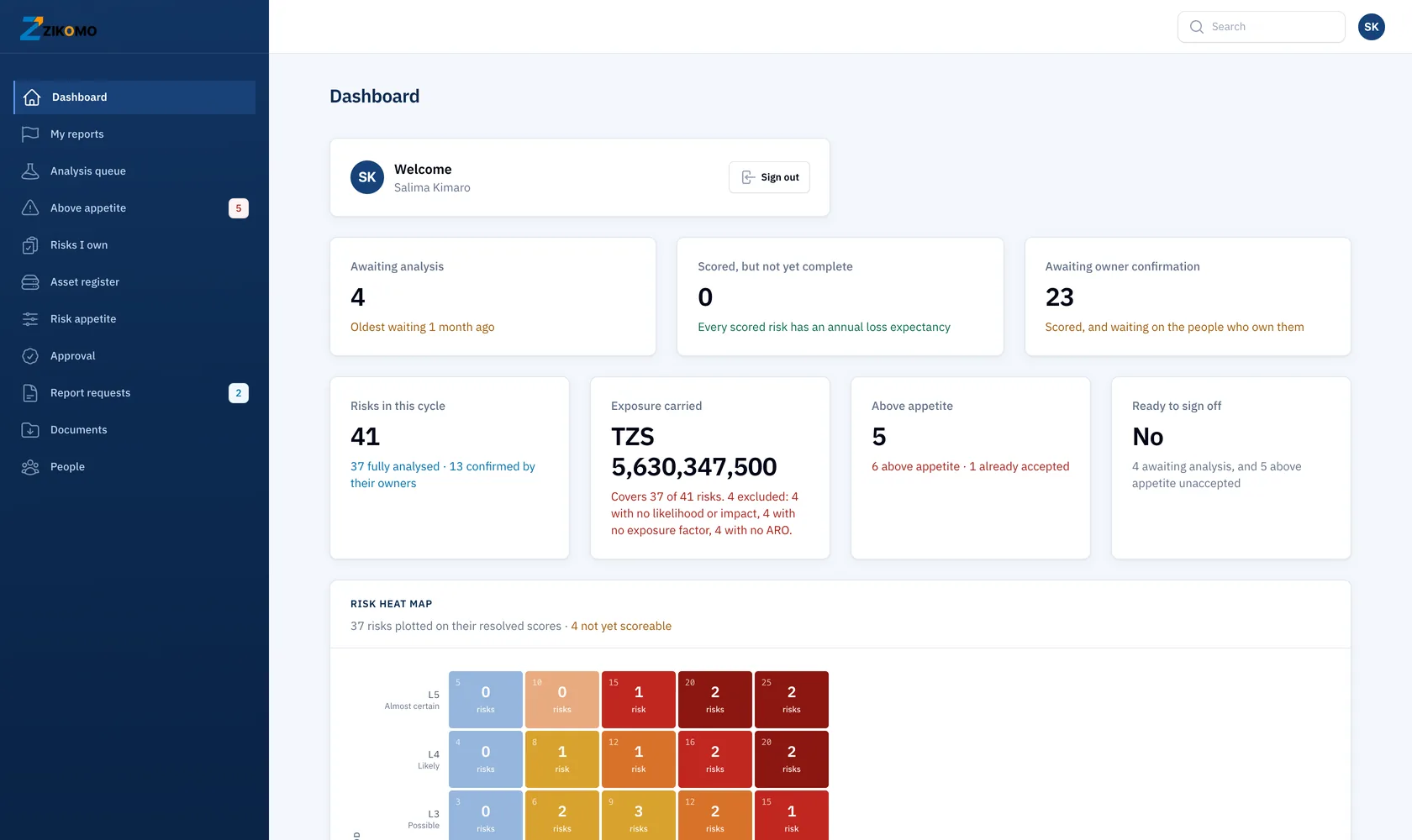
A risk assessment platform for banks and businesses across Africa, built for GUUT Technologies. Staff report risks from their phones, analysts score them, and the Chief Risk Officer signs off a register an examiner can follow line by line.
- Platforms
- Web app, Android app
- Mobile
- React Native, Expo
- Seats
- Five roles, each with its own view
- Standards
- Built on ISO 27001 and ISO 31000
- Client
- GUUT Technologies, UK
The constraint
A bank’s risk register decides where money and attention go, and an examiner may ask how every number on it was reached. The specification arrived as a spreadsheet built on ISO 31000 and ISO 27001. The people who notice a risk are not the people qualified to score it, and the person who signs the register off has to see exactly what they are accepting.
What most people would have built
The spreadsheet as a web form. One login that sees everything, scores typed in by hand, and an export at the end of the year. It looks finished, and it cannot tell an examiner who changed a number, when, or why.
Five seats, five different products
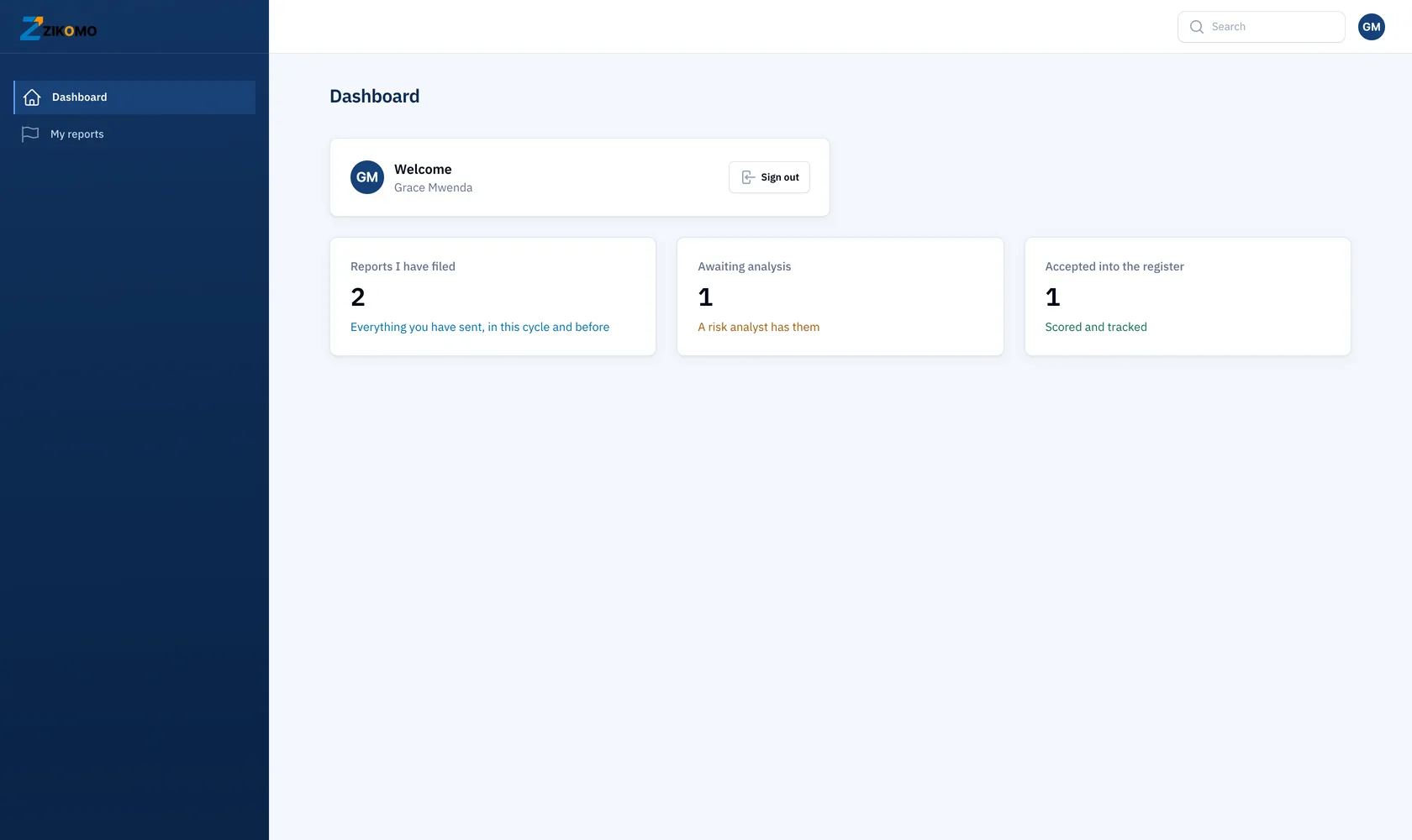
A risk champion, a risk analyst, a risk owner, the Chief Risk Officer and a read-only seat sign in to the same address and get a different page each. A champion’s dashboard is deliberately sparse: three tiles and no register, because a teller reporting a problem does not need to see the bank’s control gaps.
Reporting a risk takes six questions
Staff report from their phones in their own words: which asset, where the problem comes from, what is weak, what could happen, who it affects, and anything else. They are never asked how serious it is. Somebody qualified scores it, and the reporter sees it move through the process with its reference number.
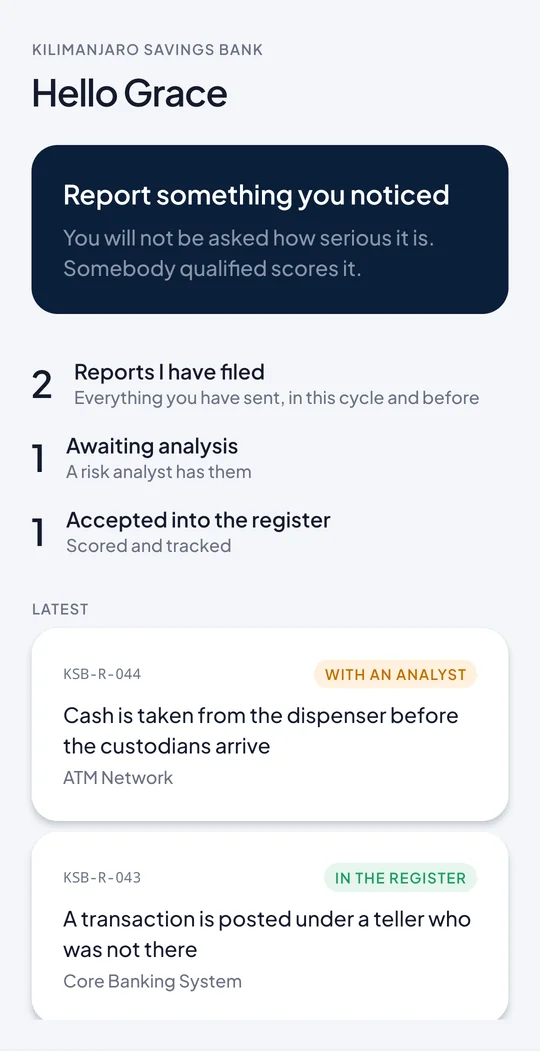
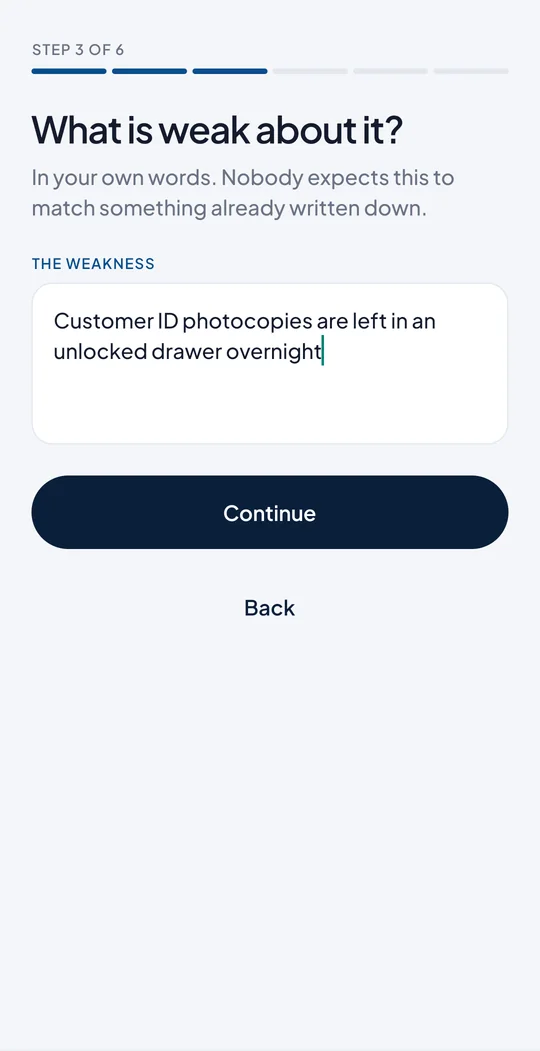
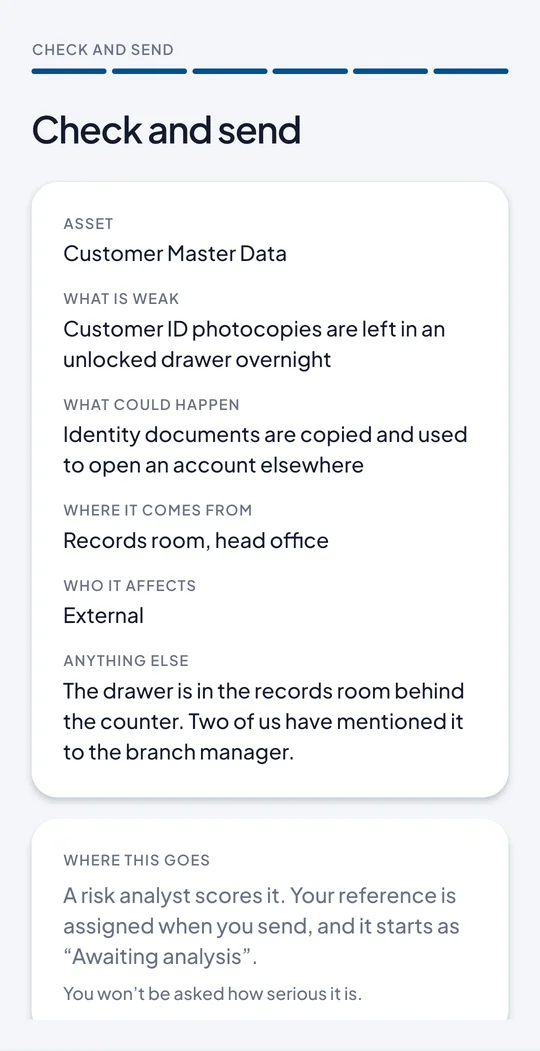
Home, one step of the report, and the check before sending. Demo data.
Scores are proposed, confirmed and computed
An analyst proposes the likelihood and impact, and the accountable risk owner confirms them. The money figures, risk score, weight, estimated value and annual loss expectancy, are written only by the engine from the inputs, so nobody can type a number that should have been worked out. On the phone the live figures stay pinned to the foot of the screen while the analyst works.
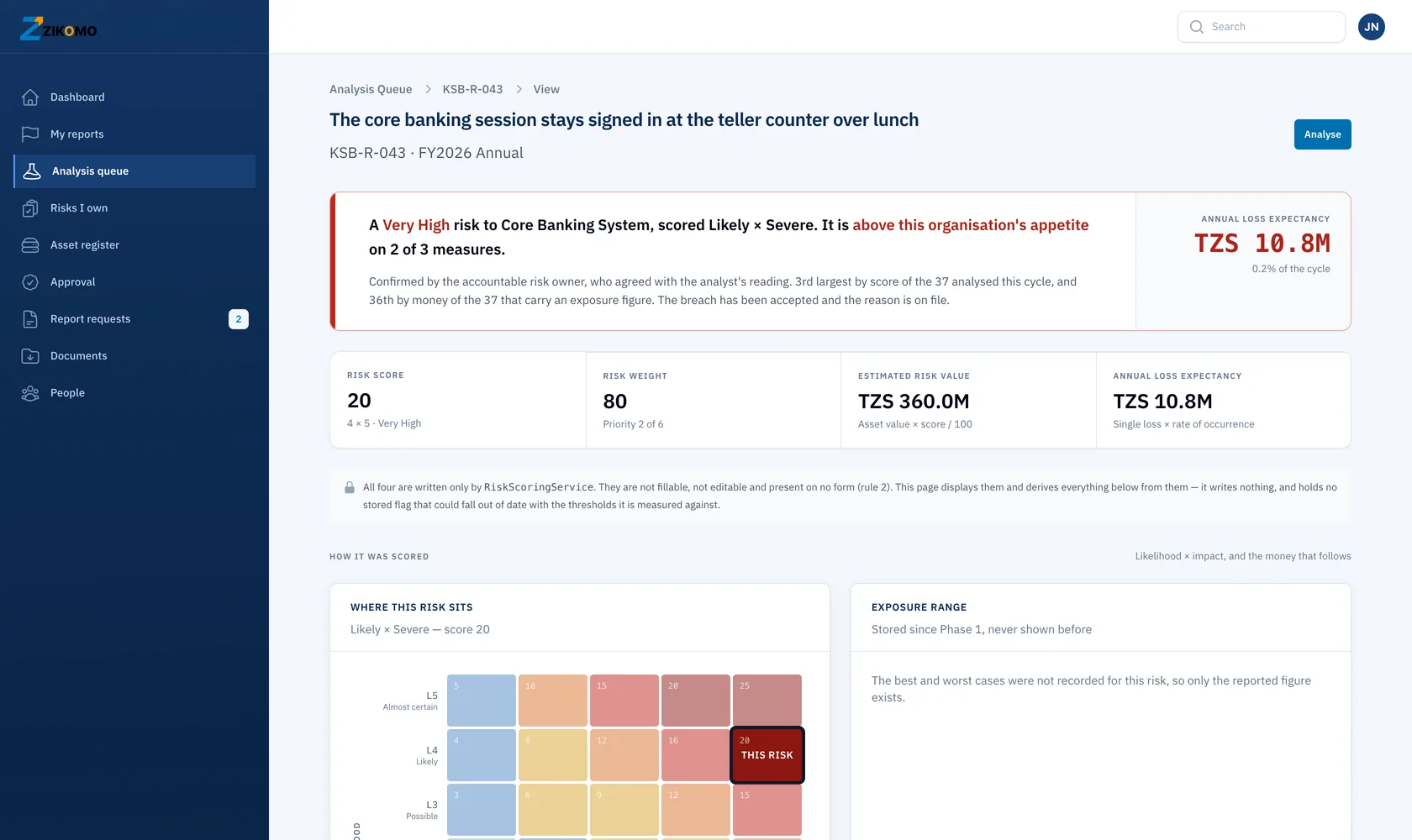
Every reason on one page
A single risk shows its verdict, the four computed figures, its place on the heat map, the full calculation behind the annual loss, which appetite lines it crosses, the treatment and the audit trail. A risk owner reading it on a phone sees the same derivation, line by line.
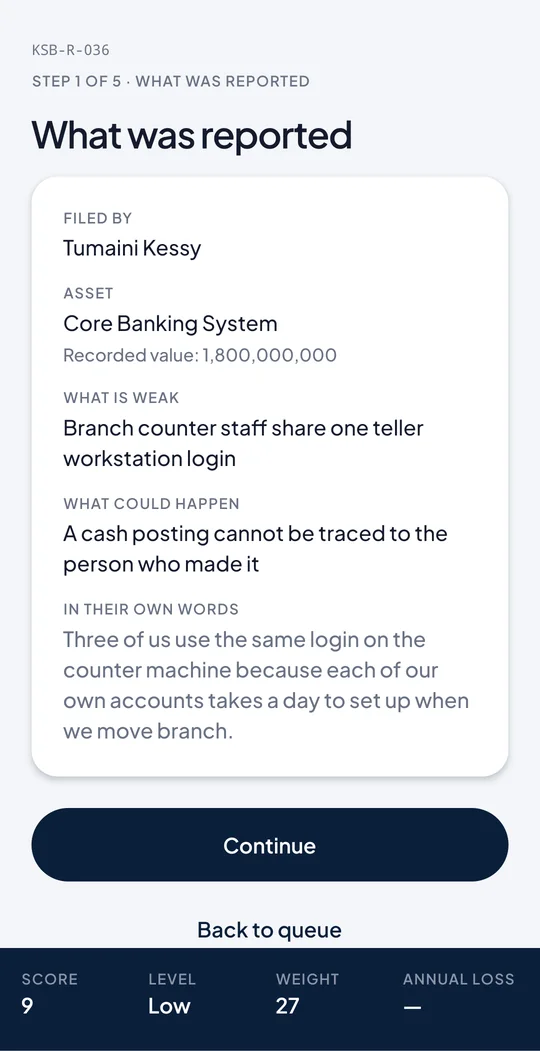
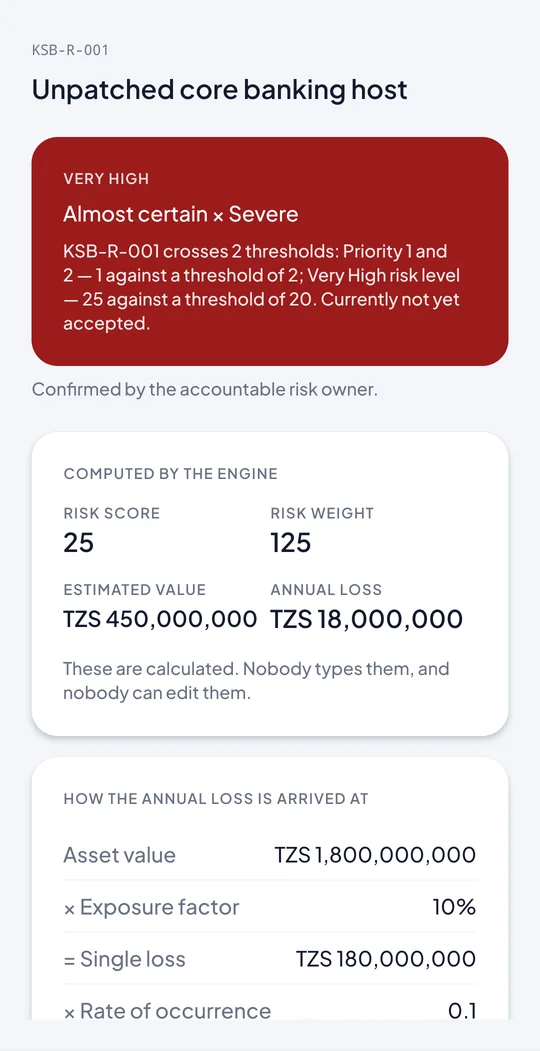
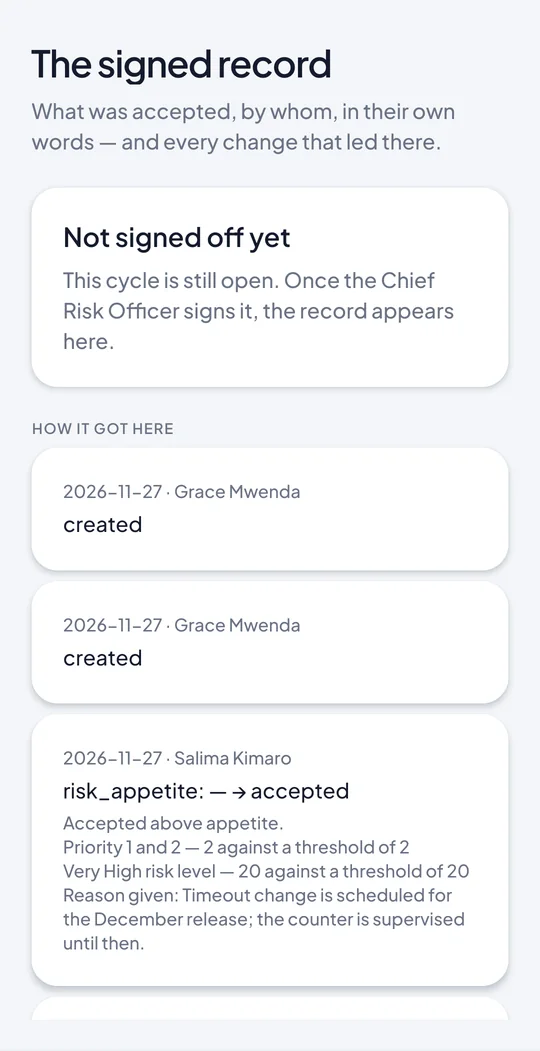
Analyst scoring, a risk owner’s view of one risk, and the signed record with its audit trail. Demo data.
A sign-off gate that refuses
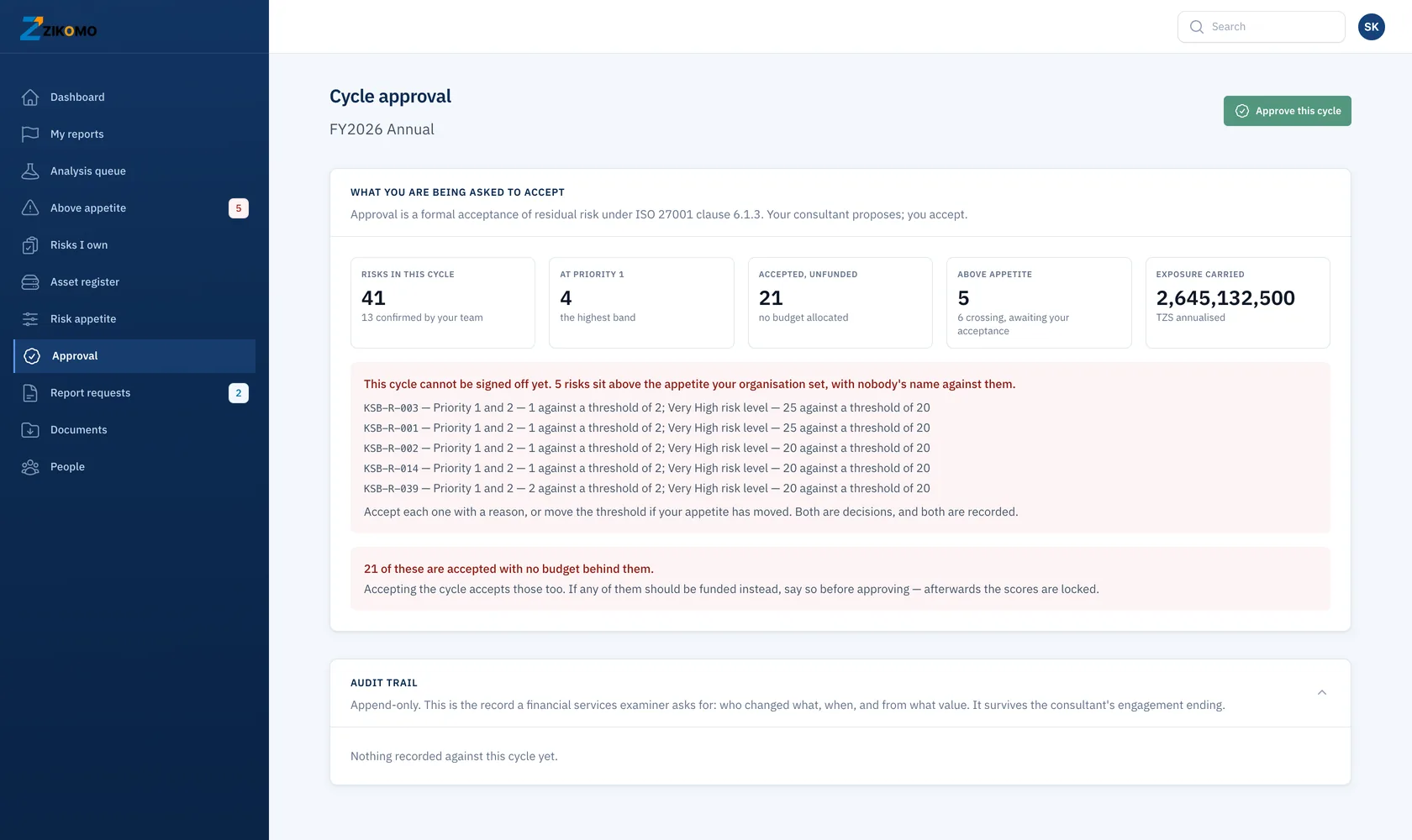
The Chief Risk Officer sets the appetite: the thresholds above which a risk escalates and to whom. A cycle cannot be signed off while risks sit above appetite with nobody’s name against them. The approval screen lists each blocker in plain words, and every acceptance is recorded with who made it and why.
A phone app that cannot be photographed
Each phone is protected by a PIN, and the device list in the profile shows every phone signed in to the account. The released Android app blocks screenshots and hides itself from the recent-apps preview, because a risk register is the last thing a bank wants in someone’s camera roll. The phone screenshots on this page come from a development build.
What comes next
AI features were left out of the first phase on purpose. The scoring has to be explainable to an examiner first, and anything a model suggests will come as a separate upgrade, labelled as a suggestion and never written into the register as a finding.
Demo data: Kilimanjaro Savings Bank is a made-up bank, and every figure is fictional. The screenshots were taken from a demo organisation, not from any client’s register.
This project sits under Web applications. See all the work.