
Home / Services / Escrow and wallet systems
Escrow and wallets where every naira can be traced.
Naxfront designs and builds escrow platforms and digital wallets for marketplaces, gaming platforms and fintech products. Every balance comes from a double-entry ledger, every escrow is a set of logged states, and the dispute path is designed on day one, not after the first argument.
- The buyer pays in+ ₦50,000
- Held. Neither side can move it₦50,000
- Delivery confirmed. The seller is paid− ₦50,000
Who comes to us for this
A marketplace between strangers
Buyers will not pay first and sellers will not ship first. Escrow is the neutral party in the middle, and it has to be one both sides believe.
A product with stored value
Players, riders, savers or agents keep a balance with you. It has to be right after deposits, spending, refunds, reversals and the requests that arrived twice.
Service work paid in stages
Freelance, construction or agency work where money should release against milestones, not all at once.
A wallet that has started to drift
Support keeps adjusting balances by hand. We find out why, fix the cause and move the balances onto a ledger without stopping the product.
What we build
- Escrow states: initiated, funded, held, released, disputed, refunded, expired and reversed, with every move logged
- Milestone releases, each against its own condition
- A double-entry ledger where balances are worked out, never edited
- Holds, reserves and pending balances shown separately from available money
- Disputes with evidence, deadlines and a named person who decides
- Payouts that respect settlement times and the float you actually hold
- Fees, commissions and splits recorded as entries of their own
- Daily reconciliation against the gateway and the bank
Usually built withTypeScriptNode.jsPythonPHPPostgreSQLMySQLRedisQueuesPaystackFlutterwave
What we have built
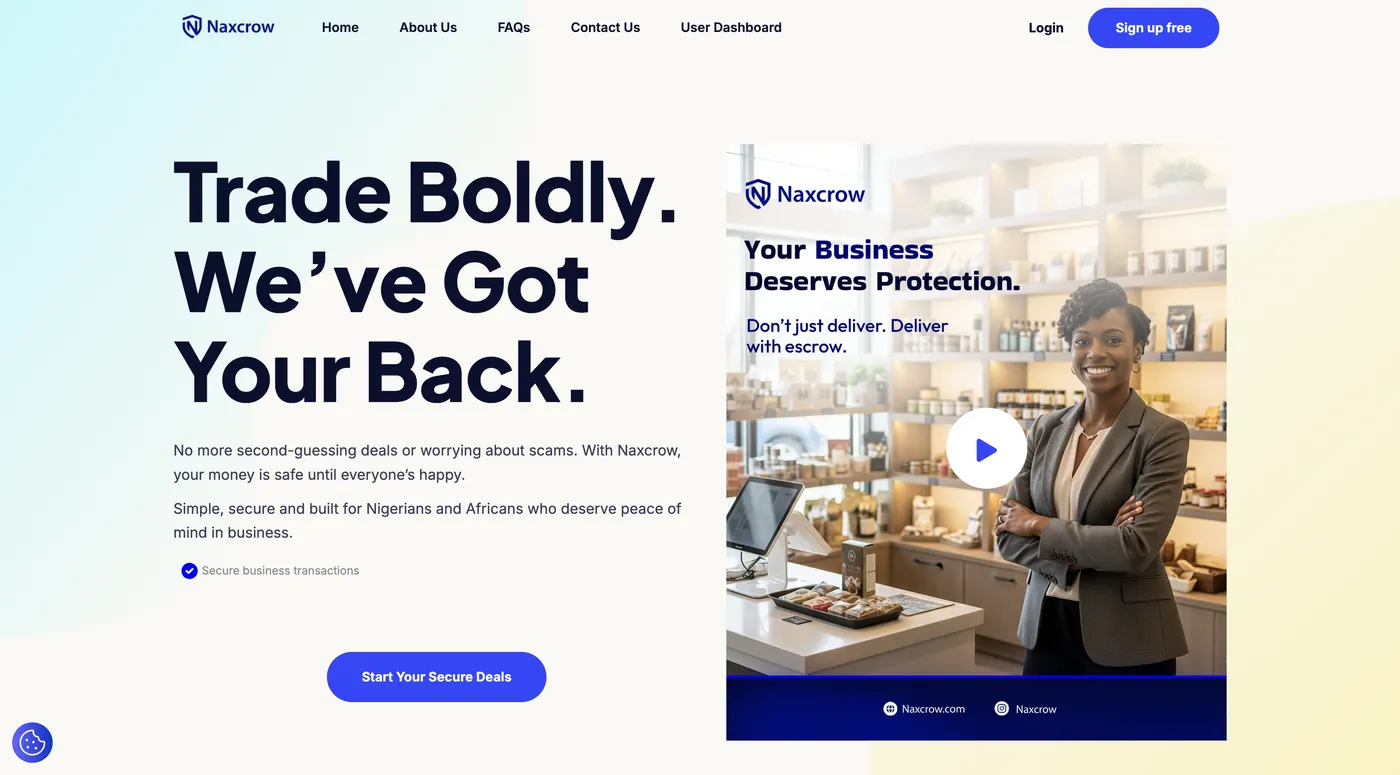 NaxcrowBuilt, not launchedEscrow for buyers and sellers who do not trust each other yet, released against milestones, with a dispute path from the start.
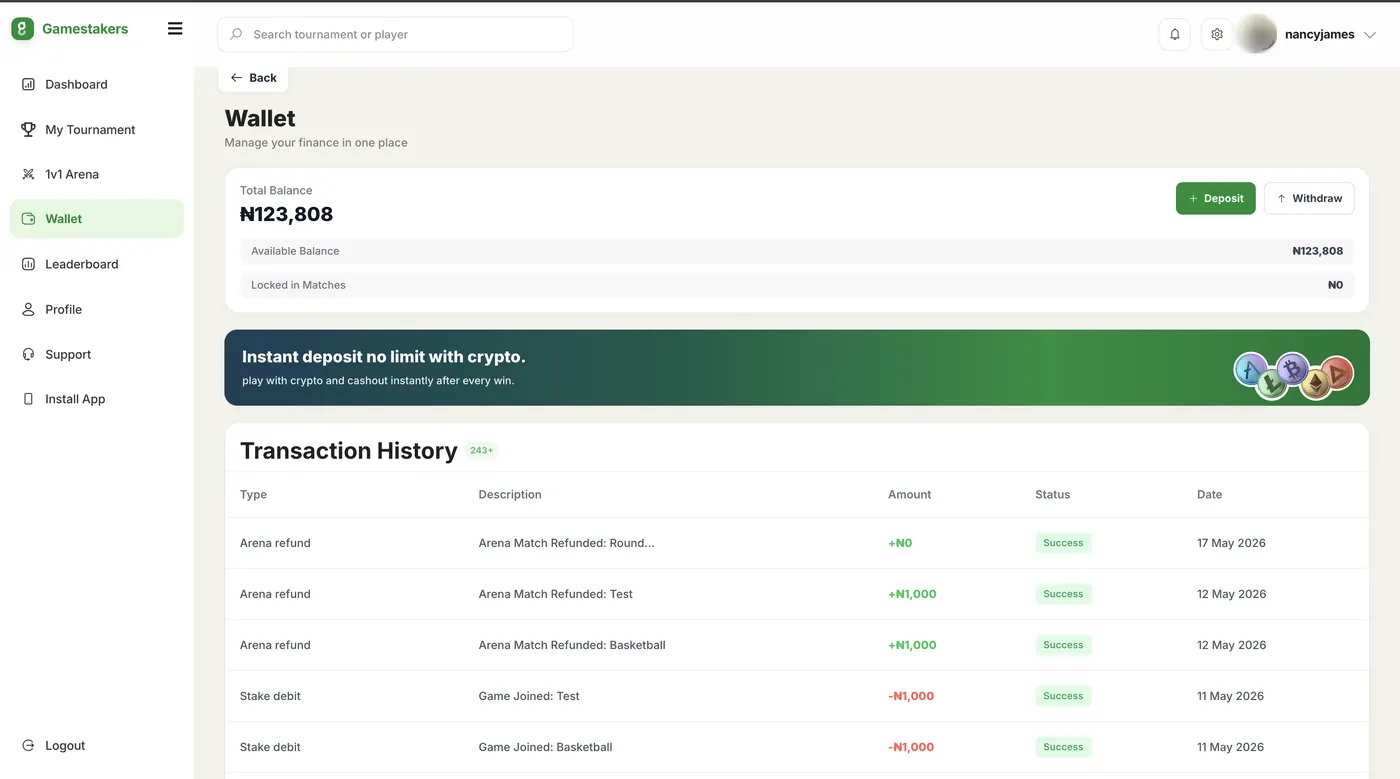 GamestakersLiveReal-money tournaments. Escrow holds every stake until a result is settled, and the wallet is a ledger, never an edited number.
Naxcrow was built and never launched, so it has processed no real money. Gamestakers is live and holds every stake in escrow until a result is settled.
How a project runs
You see working software at the end of each stage, and you pay for the next stage only once you have accepted the last one.
- 1Talk it throughA call or a written brief. What it has to do, and what it must never do.
- 2Blueprint and quoteArchitecture, milestones and risks, with a fixed price, written down.
- 3Build in slicesWorking software at the end of every milestone, not a status report.
- 4Launch and hand overDeployment, monitoring, documentation and the keys in your name.
- 5Stay reachableSupport after go-live, on a monthly retainer if you want one.
Questions people ask first
How is escrow different from a wallet?
A wallet holds a user’s own money. Escrow holds money that belongs to nobody yet, and releases it to one side when a condition is met. Most platforms need both, on the same ledger.
Who decides a dispute?
A person you appoint, with the evidence in front of them. Software can gather the evidence, route the case and keep the clock, but it should not decide alone.
Can users withdraw instantly?
Only if you hold enough float to cover money that has not settled yet. We build the payout rules around what you can actually afford to pay out today.
Do we need a licence to run escrow?
In many countries, holding other people’s money needs a licence or a licensed partner. Ask a lawyer where you operate. We design the system to work with whichever structure you choose.
Can you move our existing wallet onto a ledger?
Usually, yes. We replay the history you have into ledger entries, check the totals match today’s balances, and switch over without downtime.