
Home / Services / Data dashboards
Dashboards that replace the weekly spreadsheet.
Naxfront builds business dashboards and reporting tools on top of the data you already have, in your database, your payment provider, your spreadsheets or your other systems. The goal is simple: the numbers you check every week, correct and up to date, without anyone copying them by hand.
Who comes to us for this
An owner who wants to see the business
Sales, cash, stock or bookings are spread across several tools. You want one screen that shows how the week is going.
A team that rebuilds the same report every week
Someone spends hours each Monday pulling numbers together. That time can go back to them.
A product that needs analytics for its users
Your customers want charts and exports inside your app, not a CSV emailed to them.
A trading or finance team
Positions, drawdown, reconciliation breaks and P&L, shown the way a person scans them at speed.
What we build
- Dashboards that pull from your database, payment provider and spreadsheets
- Scheduled reports by email or WhatsApp
- Data cleaned and joined into one place you can trust
- Charts and exports inside your own product for your customers
- Alerts when a number moves outside its normal range
- Access controls so each team sees its own figures
- Clear definitions for every metric, written down
- A light data pipeline you can run without a data team
Usually built withPythonpandasSQLPostgreSQLReactChartsScheduled jobs
What we have built
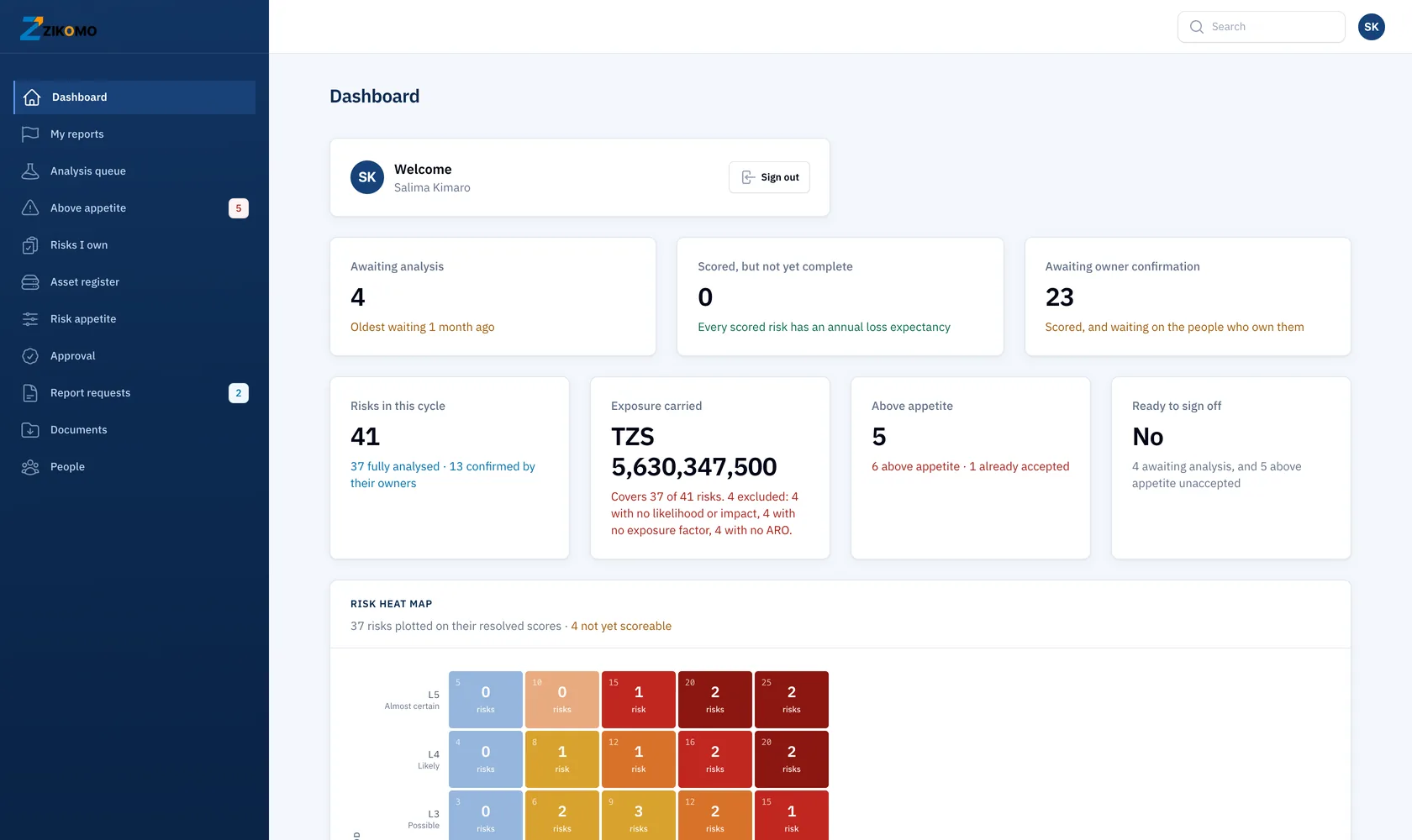 ZikomoLaunchedA risk register for banks on web and Android, with five seats and a sign-off gate. Shown with demo data.
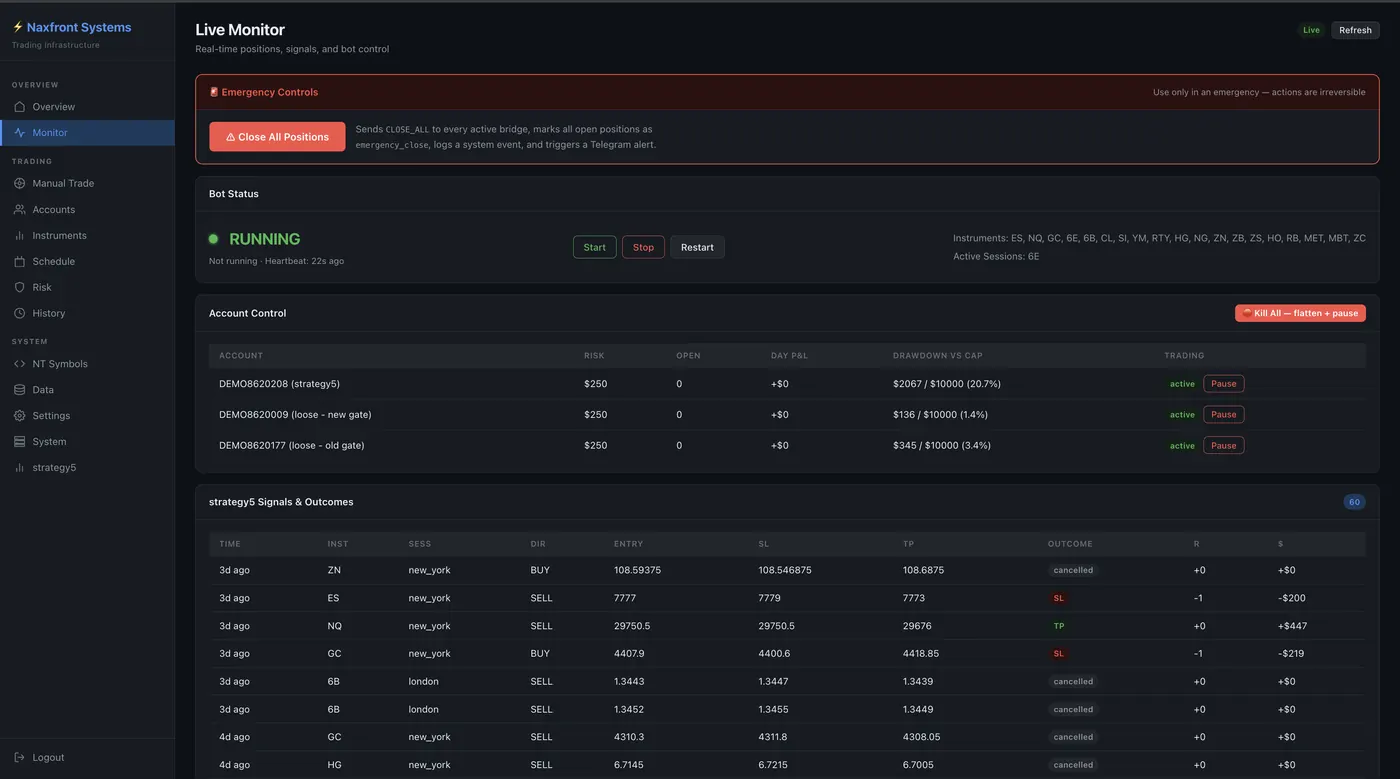 Naxfront SystemsDemo stageFutures trading built to run unattended. Four brokers behind one interface and twelve checks before any order.
We also built a business analytics dashboard for GUUT Technologies, in an engagement before Zikomo. Nancy holds the Google Data Analytics Professional Certificate.
How a project runs
You see working software at the end of each stage, and you pay for the next stage only once you have accepted the last one.
- 1Talk it throughA call or a written brief. What it has to do, and what it must never do.
- 2Blueprint and quoteArchitecture, milestones and risks, with a fixed price, written down.
- 3Build in slicesWorking software at the end of every milestone, not a status report.
- 4Launch and hand overDeployment, monitoring, documentation and the keys in your name.
- 5Stay reachableSupport after go-live, on a monthly retainer if you want one.
Questions people ask first
Do I need a data warehouse?
Probably not to start. Most small and mid-sized businesses can get far with their existing database and a well designed reporting layer.
Can you use our existing spreadsheets?
Yes. We often start from them, then move the parts that change often into a proper database so the numbers stop drifting.
Why not just use a ready-made BI tool?
Sometimes that is the right answer and we will say so. A custom dashboard makes sense when your data is spread across systems those tools cannot reach, or when the dashboard lives inside your own product.
How do we know the numbers are right?
Every metric gets a written definition, and we check the dashboard against figures you already trust before it goes live.